Program
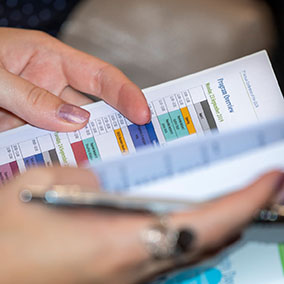
Download the short program
here;
the complete program (including abstracts) is available for participants on 📧 demand.
The program is also available as an → Online App at the start of the GSCN conference. supported by Life & Brain GmbH
| Wednesday | Thursday | Friday |
Wednesday, 13 September 2023
| 11:00 – 11:30 H 4/5 |
Opening GSCN Conference 2023 |
|
| 11:00 – 11:10 | Welcome to Ulm University Thomas Wirth, Dean of the Medical Faculty of the University of Ulm |
|
| 11:10 – 11:20 | Welcome to the city of Ulm Hartmut Geiger, Local Organizer and Former President GSCN 2019 – 2020 |
|
| 11:20 – 11:30 | Opening of GSCN Conference 2023 Claudia Waskow, President GSCN |
|
| 11:30 – 12:15 H 4/5 |
Keynote lecture I K1 – Mechanisms driving clonal hematopoiesis Margaret Goodell, Baylor College of Medicine, Houston, Texas, US Chair: Claudia Waskow |
|
| 12:15 – 13:00 H 4/5 |
Keynote lecture II K2 – Stem cell niches and beyond Hiromitsu Nakauchi, Stanford Medicine, California, US Chair: Alexander Kleger |
|
| 13:00 – 14:30 | Lunch break / Industry exhibition supported by denovoMatrix GmbH | |
| 14:30 – 16:00 | Concurrent scientific working group session I | |
| 14:30 – 16:00 H 1 |
Stem cells in disease modeling & drug development I supported by bit.bio (Chairs: Oliver Brüstle / Karl-Ludwig Laugwitz) |
|
| 14:30 – 15:00 | T01 – Quality-controlled and well-characterized human pluripotent stem cells: a foundation for reproducible disease modeling and drug screening Harald Stachelscheid, Berlin Institute of Health (BIH) at Charité |
|
| 15:00 – 15:15 | T02 – RB1-negative organoids model retinoblastoma with proliferation of cone photoreceptors and loss of retinal cell type differentiation Julia Wöstefeld, University hospital Essen |
|
| 15:15 – 15:30 | T03 – Investigating the impact of ELP1 predisposition on SHH-medulloblastoma tumorigenesis: insights from iPSC-derived models Frederik Manz, Hopp Chidrens's Cancer Center (KiTZ) Heidelberg |
|
| 15:30 – 15:45 | T04 – Primary ciliary dyskinesia patient-specific hiPSC-derived airway epithelium in air-liquid interface culture recapitulates disease specific phenotypes in vitro Laura von Schledorn, Hannover Medical School (MHH) |
|
| 15:45 – 16:00 | T05 – Unraveling the role of long non-coding RNAs in pancreatic development and ß-cell functionality Sarah Merz, Ulm University |
|
| 14:30 – 16:00 H 2 |
Pluripotency & reprograming supported by Miltenyi Biotec B.V.& Co. KG (Chairs: Micha Drukker / Hans Schöler) |
|
| 14:30 – 15:00 | T06 – Reprogramming toward next-generation stem cell models with re-engineered transcription factors Ralf Jauch, University of Hong Kong, China |
|
| 15:00 – 15:15 | T07 – Single cell mass cytometry analysis identifies Nacc1, a known pluripotent stem cell regulator to also regulate totipotent stem cell fate of embryonic stem cells Thulaj Mehawarde, Montreal Clinical Research Institute, Canada |
|
| 15:15 – 15:30 | T08 – Highly cooperative chimeric super-SOX induces naïve pluripotency across species Caitlin McCarthy, MPI for Molecular Biomedicine, Münster |
|
| 15:30 – 15:45 | T09 – Zic3 and Otx2 link Xist activation to the formative pluripotency network Till Schwaemle, MPI for Molecular Genetics, Berlin |
|
| 15:45 – 16:00 | T10 – Reprogramming activates those 55 specific polymorphic, functional LINE-1 loci in pluripotent stem cell genomes that are mobilized in human tumor cells Gerald Schumann, Paul Ehrlich Institute, Langen |
|
| 14:30 – 16:00 H 3 |
Computational stem cell biology (Chairs: Ingmar Glauche / Carsten Marr) |
|
| 14:30 – 15:00 | T11 – Cell fate patterns in preimplantation mouse embryos Sabine Fischer, University of Würzburg |
|
| 15:00 – 15:15 | T12 – Challenges in machine-learning based detection of measurable residual disease in acute myeloid leukemia Friedemann Uscher, Technical University Dresden |
|
| 15:15 – 15:30 | T13 – Shedding light on spatial changes of the septin network within LT-HSCs upon aging with open-source software CellDetail Tanja Schuster, Ulm University |
|
| 15:30 – 15:45 | T14 – Developmental trajectories of adult B-cell Acute Lymphoblastic Leukemia (BCP-ALL)-initiating cells at a single-cell level Adrien Jolly, Goethe University Hospital, Frankfurt |
|
| 15:45 – 16:00 | T15 – Gene expression noise dynamics unveil functional heterogeneity of ageing hematopoietic stem cells Reyna Edith Rosales Alvarez, University of Würzburg |
|
| 16:00 – 16:30 | Break time / Industry exhibition supported by Thermo Fisher Scientific | |
| 16:30 – 17:30 H 2 |
General Meeting Executive Board & Managing Director Claudia Waskow, Hans Schöler, Heiko Lickert, Michael Cross, Andreas Trumpp, Daniel Besser |
|
| 17:30 – 19:30 Foyer |
Poster session I (Poster number P001-P061) supported by OLS OMNI Life Science GmbH (with beverages) Somatic stem cells & development: P001 – P008 Stem cell organoids: P009 – P017 Disease modeling & drug development: P018 – P061 Even numbers: 17:30 – 18:30 Odd numbers: 18:30 – 19:30 |
|
| 19:45 -20:30 H 4/5 |
Keynote lecture III (on ELSA topics) K3 – Modeling mouse and human development with stem cells: the science and the ethics Nicolas Rivron, IMBA, Austrian Academy of Science, Vienna, Austria Chair: Aljoscha Berve |
|
| 20:30 – 22:00 Foyer |
GSCN Get-together for all participants Dinner buffet in the Foyer |
|
| Top |
Thursday, 14 September 2023
| 09:00 – 10:30 | Concurrent scientific working group session II | |
| 09:00 – 10:30 H 1 |
Stem cells in disease modeling & drug development II (Chairs: Bert Klebl / Harald Stachelscheid) |
|
| 09:00 – 09:15 | T16 – TPP1 gene therapy ablates disease phenotype in neuronal ceroid lipofuscinosis type 2 in retinal organoid and retina-on-chip models Kevin Achberger, University of Tübingen |
|
| 09:15 – 09:30 | T17 – A human iPSC model of Tauopathies engineered for adult Tau isoform expression displays late-stage neuronal Tau pathology Angelika Dannert, Ludwig Maximilians University (LMU), Munich |
|
| 09:30 – 09:45 | T18 – Beyond cell-autonomous phenotypes: multi-compartment modeling of human nociception Pascal Röderer, University of Bonn |
|
| 09:45 – 10:00 | T19 – An isogenic human iPSC model unravels neurodevelopmental abnormalities in spinal muscular atrophy Natalia Rodriguez-Muela, German Center for Neurodegenerative Diseases (DZNE), Dresden |
|
| 10:00 – 10:15 | T20 – Characterizing the neurotoxic effects of paclitaxel in human induced pluripotent stem cell (iPSC)-derived sensory neurons in a multi-omic approach Christian Schinke, Charité – Berlin University Medicine |
|
| 10:15 – 10:30 | T21 – Modeling metastatic cancer niches for drug discovery using human iPSC-derived brain organoids Ole Pless, Fraunhofer ITMP Hamburg |
|
| 09:00 – 10:30 H 2 |
Stem cell organoids (Chairs: Sina Bartfeld / Mina Gouti) |
|
| 09:00 – 09:30 | T22 – 3D electrically excitable cell networks – from brain to heart Maria-Patapia Zafeiriou, University Medical Center Göttingen |
|
| 09:30 – 09:45 | T23 – Inducing lung differentiation in human heart-forming organoids to form complex lung-HFOs Lika Drakhlis, Hannover Medical School (MHH) |
|
| 09:45 – 10:00 | T24 – Development of a skin cancer model using melanoma tumor spheroids and skin organoids Dieter Groneberg, Fraunhofer-Institute for Silicate Research ISC, Würzburg |
|
| 10:00 – 10:15 | T25 – Modeling Johanson-Blizzard syndrome (JBS) in a dish – molecular insights into UBR1 deficiency using pluripotent stem cell-derived pancreatic organoids Leon Reichardt, Ulm University |
|
| 10:15 – 10:30 | T26 – Generating fetal liver organoids with innate immunopoiesis from human pluripotent stem cells Milad Rezvani, Charité – Berlin University Medicine |
|
| 09:00 – 10:30 H 3 |
Stem cells in ageing & disease (Chairs: Michael Rieger / Andreas Trumpp) |
|
| 09:00 – 09:30 | T27 – Bone marrow stromal dysregulations in clonal hematopoiesis and related myelodysplasia promote an inflammatory-stress T cell landscape Borhane Guezguez, DKTK – University Medical Center Mainz |
|
| 09:30 – 09:45 | T28 – Ontogenetic and functional heterogeneity of tissue resident macrophages during aging and systemic inflammation Stephan Culemann, Leibniz Institute on Aging/FLI, Jena |
|
| 09:45 – 10:00 | T29 – Single-cell barcoding delineates a differentiation hierarchy of leukemia-initiating stem cells in adult acute lymphoblastic leukemia Alec Geßner, Goethe University Hospital, Frankfurt |
|
| 10:00 – 10:15 | T30 – Stem cell-niche interactions control leukemic expansion: conceptual insights from the mathematical modeling of acute myeloid leukemia Ingmar Glauche, Technical University (TU) Dresden |
|
| 10:15 – 10:30 | T31 – Elevated levels of Ube2g1 expression in HSCs leads to premature aging of the hematopoietic system Julian Niemann, Ulm University |
|
| 09:00 – 10:30 tbd |
ELSA symposium: What makes it (not) a human being? (Chairs: Aljoscha Berve / Tobias Cantz) Panelists: Nicolas Rivron & Hiromitsu Nakauchi |
|
| 09:00 – 09:05 | Welcome and introduction Tobias Cantz, Hannover Medical School |
|
| 09:05 – 09:15 | Interview Nicolas Rivron with Aljoscha Berve, Stemcell Network NRW, Düsseldorf What is your definition of embryoids, blastoids, self-assembled embryos and do these differences matter? Do you think the term “synthetic embryo” is justified”? What are your expectations on advanced embryoid cultivation in 10 years? How do differing international regulations affect your current research? Do you experience global differences in acceptance / funding options of your research? |
|
| 09:15 – 09:25 | Interview Hiromitsu Nakauchi with Tobias Cantz What are your expectations on the use of human-animal chimera for organ development in 10 years? If an organ is generated by embryo complementation with patient-derived iPS cells. Who owns the organ? Germline contribution of human cells is a critical issue. But to what extent does neural chimerism matter? How do differing international regulations affect your current research? Do you experience global differences in acceptance / funding options of your research? |
|
| 09:25 – 10:15 | Panel discussion / plenum: What characteristics are missing to make an embryoid a human being? And, what is missing to make a chimeric animal a human being? Subsequent to the term “synthetic embryo”, do we have to contemplate the term “synthetic human being”? Are there “safety switches” that would address major doubts? Could we envision a road map that guides a step-wise development advanced embryoids human-animal chimeras? |
|
| 10:15 – 10:20 | Concluding remarks Aljoscha Berve |
|
| 10:20 – 10:30 | Civey survey on embryo research regulation in Germany How does the German (internet) public feel about embryo research regulation? Daniel Besser |
|
| 10:30 – 11:00 | Break time / Industry exhibition supported by Axion BioSystems | |
| 11:00 – 12:30 | Industry session: "Technologies from GSCN industry partners" | |
| 11:00 – 12:30 H 4/5 |
Gold & Silver Supporter (Chair: Michael Cross) |
|
| 11:00 – 11:30 | C01 – Life & Brain integrated services: molecular karyotyping for cost-effective quality control of stem cell systems Michael Peitz, Life & Brain GmbH |
|
| 11:30 – 12:00 | C02 – Enhanced genetic stability of human pluripotent stem cells maintained as single cells under optimized culture conditions Kimberly Snyder, STEMCELL Technologies Inc., Vancouver, BC, Canada |
|
| 12:00 -12:30 | C03 – Replace, Reduce, and Refine with Bio-Techne – kick-start your animal-free research Simon Sumer, Bio-Techne |
|
| 11:00 – 12:30 H 1 |
Silver Supporter (Chair: Michaela Frye) |
|
| 11:00 – 11:30 | C04 – Rapid and consistent generation of functional hiPSC-derived microglia to accelerate drug discovery for neurodegenerative diseases Malathi Raman, bit.bio |
|
| 11:30 – 12:00 | C05 – Establishing an exosome isolation process – from stirred 3D-stem cell cultures to efficient isolation Philipp Nold, Eppendorf SE |
|
| 12:00 – 12:30 | C06 – Highly customizable single-use bioreactors paving the way towards precision medicine Parinaz Ashrafi, Dirk Otter, Getinge |
|
| 11:00 – 12:30 H2 |
Silver & Bronze Supporter (Chair: Ulrich Martin) |
|
| 11:00 – 11:30 | C07 – Efficient and seamless reprogramming using mRNA Sebastian Knöbel, Miltenyi Biotec B.V. & Co. KG |
|
| 11:30 – 12:00 | C08 – Identification of an FXR-modulated liver-intestine hybrid state in IPSC-derived hepatocyte-like cells Patrick Nell, IfaDo, Dortmund for Takara Bio Europe, SAS |
|
| 12:00 – 12:15 | C09 – Next generation cytogenomics with optical genome mapping: quality assessment for cell bioprocessing Julika Borde, Bionano |
|
| 12:15 – 12:30 | C10 – Chemically defined biomatrices for efficient isolation and manufacturing of stem cells Richard Wetzel, denovoMATRIX GmbH |
|
| 11:00 – 12:30 H 3 |
Bronze Supporter (Chair: Nico Lachmann) |
|
| 11:00 – 11:15 | C11 – Gentle single-cell isolation technologies for generating clonal hiPSC cultures with market-leading efficiencies Alex Feuerborn, iotaSciences |
|
| 11:15 – 11:30 | C12 – Reliable 3D Cell Models – High-Yield Cultivation Meets Precision Sorting Markus Uhrig, OLS OMNI Life Science GmbH & Co. KG |
|
| 11:30 – 11:45 | C13 – In vitro differentiation of human pluripotent stem cells: role in pancreatic development and diabetes research Sandra Heller, Universitätsklinik Ulm for PeproTech GmbH, part of Thermo Fisher Scientific |
|
| 11:45 – 12:00 | C14 – A large-scale standardized production workflow of 3D organoids and their use in high-throughput screening applications Christian Holz, Molecular Devices (Germany) GmbH |
|
| 12:00 – 12:15 | C15 – Development of a Real-Time Assay for Tracking the Proliferation of iPSCs and iPSCderived Organoids Linda Boekestijn, Axion BioSystems |
|
| 12:15 -12:30 | C16 – Process development for efficient CAR T cell manufacturing using a closed and modular instrument workflow Xavier De Mollerat Du Jeu, Thermo Fisher Scientific |
|
| 12:30 – 14:00 | Lunch break / Industry exhibition supported by Molecular Devices GmbH | |
| 14:00 – 16:15 H 4/5 |
Presidential Symposium Chair: Claudia Waskow |
|
| 14:00 – 14:45 | Presidential Invite PS1 – Understanding and treating diabetes with islet stem cell models Maike Sander, Max Delbrück Center Berlin |
|
| 14:45 – 15:15 | GSCN 2023 Young Investigator Award PS2 – Dissecting pancreatic progenitor heterogeneity and early dysplasia using human pluripotent stem cells Meike Hohwieler, University of Ulm |
|
| 15:15 – 15:45 | GSCN 2023 Hilde Mangold Award PS3 – Modeling pancreas development with organoids Anne Grapin-Botton, Max Planck Institute of Molecular Cell Biology and Genetics, Dresden |
|
| 15:45 – 16:15 | GSCN Publication of the Year 2022 – 2023 Award PS4 – Inflammatory exposure drives long-lived impairment of hematopoietic stem cell self-renewal activity and accelerated aging Ruzhica Bogeska, German Cancer Research Center (DKFZ), Heidelberg |
|
| 16:15 – 16:30 | Break time / Industry exhibition supported by iotaSciences | |
| 16:30 – 18:30 Foyer |
Poster session II (Poster number P062 – P122) supported by Peprotech GmbH (with beverages) Computational stem cell biology: P062 – P066 Hematopoietic stem cells: P067 – P077 Pluripotency & reprograming: P078 – P084 Stem cells in aging & disease: P085 – P099 Stem cells in regenerative therapies: P100 – P122 Even numbers: 16:30 – 17:30 Odd number: 17:30 – 18:30 |
|
| 19:00 – 01:00 | GSCN networking event for all participants supported by STEMCELL Technologies GmbH The entrance fee is collected on site Event location: ➚ Wiley Club Wileystraße 4, 89231 Neu-Ulm |
Friday, 15 September 2023
| 09:00 – 10:30 | Concurrent scientific working group session III |
| 09:00 – 10:30 H 1 |
Stem cell in regenerative therapies supported by Eppendorf SE (Chairs: Michael Cross / Wolfgang Wagner) |
| 09:00 – 09:30 | T32 – Advances in iPSC-based cellular therapies – preclinical evaluation and clinical trials Ulrich Martin, Hannover Medical School (MHH) |
| 09:30 – 09:45 | T33 – iPSC-derived cultured red blood cells resemble fetal liver erythropoiesis Isabel Dorn, Medical University Graz |
| 09:45 – 10:00 | T34 – Dissecting alpha and beta cell fate specification during human endocrinogenesis Melis Akgün, Helmholtz Center Munich |
| 10:00 – 10:15 | T35 – Inhibition of fatty acid oxidation impairs satellite cell quiescence and muscle regeneration by blocking the nuclear Acetyl-CoA production and histone acetylation Xuejun Yuan, MPI for Heart and Lung Research, Bad Nauheim |
| 10:15 – 10:30 | T36 – Grafting postmitotic induced neurons: toward the establishment of defined human neuronal 3D networks Jasmin Aicher, University of Bonn |
| 09:00 – 10:30 H 2 |
Hematopoietic stem cells (Chairs: Simon Haas / Michael Milsom) |
| 09:00 – 09:30 | T37 – Deciphering how mitochondrial state impacts on hematopoietic stem cell fate Els Mansell, Erasmus MC, Rotterdam, Netherlands |
| 09:30 – 09:45 | T38 – Hematopoietic stem and progenitor cell motility and cytoskeletal dynamics Germán Camargo Ortega, ETH Zürich, Basel, Switzerland |
| 09:45 – 10:00 | T39 – Aging of human HSC niche and its impact on HSC function Ani Grigoryan, Ulm University |
| 10:00 – 10:15 | T40 – tba Jasmin Rettkowski, MPI for Immunobiology and Epigenetics, Freiburg |
| 10:15 – 10:30 | T41 – Embryonic macrophages regulate the size of the definitive HSC pool Gülce Percin, Leibniz Institute on Aging / FLI, Jena |
| 09:00 – 10:30 H 3 |
Somatic stem cells & development (Chairs: Thomas Braun / Ana Martin-Villalba) |
| 09:00 – 09:18 | T42 – Dynamics and functions of widespread RNA isoform changes during neuronal cell differentiation Andreas Mayer, MPI for Molecular Genetics, Berlin |
| 09:18 – 09:36 | T43 – Unraveling heterogeneity and dynamics of muscle stem cell niches through integration of single-cell transcriptomics and advanced imaging Josephine Bageritz, COS Heidelberg University |
| 09:36 – 09:54 | T44 – Genetic dissection of in vivo direct cellular reprogramming Ismail Özcan, University of Hamburg |
| 09:54 – 10:12 | T45 – Spatial transcriptomics reveal asymmetric cellular responses to injury in the regenerating spiny mouse (Acomys) ear Kerstin Bartscherer, Osnabrück University |
| 10:12 – 10:30 | T46 – Derivation of human fetal-derived neuroepithelial progenitors mirroring the early stages of human brain development Marcel Tisch, University of Innsbruck, Austria |
| 10:30 – 11:00 | Break time / Industry exhibition |
| 11:00 – 12:30 | Concurrent strategic working group session |
| 11:00 – 12:30 H 4/5 |
Clinical trials & regulatory affairs (Chairs: Zoltan Ivics / Torsten Tonn) |
| 11:00 – 11:30 | S1 – Developing a national strategy for gene and cell therapy Christopher Baum, Berlin Institute of Health (BIH) at Charité |
| 11:30 – 12:00 | S2 – Stakeholders perspectives on the national strategy on gene and cell therapy Zoltan Ivics, Paul Ehrlich Institute, Langen |
| 12:00 – 12:30 | S3 – Regulatory support in product development Christoph Conrad, Berlin Institute of Health (BIH) at Charité |
| 11:00 – 12:30 H 2 |
Career development (Chairs: Germán Camargo / Insa Schröder) |
| S4 – Power abuse in academia – what‘s the problem and what can be done? Karin Höhne, Berlin Institute of Health (BIH) at Charité |
|
| 11:00 – 12:30 H 3 |
Technologies in stem cell research (Chairs: Andreas Bosio / Sebastian Diecke) |
| 11:00 – 11:30 | EMBO YIP Lecture![]() S5 – Clonally resolved single-cell multi-omics of leukemic and hematopoetic stem cells Lars Velten, Centre for Genomic Regulation (CRG), Barcelona, Spain |
| 11:30 – 12:00 | S6 – Spatio-temporal, optogenetic control of gene expression in stem cells and organoids Ivano Legnini, Human Technopole, Milano, Italy |
| 12:00 – 12:30 | S7 – Temporal topography of malignant brain tumors Dieter Henrik Heiland, University hospital Freiburg |
| 12:30 – 14:00 | Lunch break / Industry exhibition supported by Bionano |
| 14:00 – 14:45 H 4/5 |
Keynote lecture IV & EMBO Keynote Lecture![]() K4 – Differentiation and dedifferentiation in mammalian epidermis Fiona Watt, EMBL Heidelberg Chair: Mareike Essers |

| 14:45 – 15:30 H 4/5 |
Keynote lecture V K5 – Multilayer control of plant stem cell behavior Jan Lohmann, COS University Heidelberg Chair: Heiko Lickert |
| 15:30 – 15:50 | Poster award ceremony Daniel Besser Poster awards supported by Getinge Travel awards supported by Bio-Techne |
| 15:50 – 16:00 | Closing remarks by the GSCN president Claudia Waskow |
| End of GSCN Conference 2023 | |
| Top |
Keynote Speakers 2023
Speakers & Session Chairs
Sina Bartfeld (Berlin)
Aljoscha Berve (Düsseldorf)
Daniel Besser (Berlin)
Andreas Bosio (Bergisch Gladbach)
Thomas Braun (Bad Nauheim)
Oliver Brüstle (Bonn)
German Camargo Ortega (Basel)
Tobias Cantz (Hannover)
Michael Cross (Leipzig)
Sebastian Diecke (Berlin)
Micha Drukker (Leiden, NL)
Marieke Essers (Heidelberg)
Hartmut Geiger (Ulm)
Ingmar Glauche (Dresden)
Ira Herrmann (Bonn)
Alexander Kleger (Ulm)
Hannes Klump (Essen)
Nico Lachmann (Hannover)
Karl-Ludwig Laugwitz (Munich)
Heiko Lickert (Munich)
Stefan Liebau (Tübingen)
Carsten Marr (Munich)
Ulrich Martin (Hannover)
Ana Martin-Villalba (Heidelberg)
Michael Rieger (Frankfurt a.M.)
Richard Schäfer (Frankfurt)
Insa Schröder (Darmstadt)
Hans Schöler (Münster)
Torsten Tonn (Dresden)
Andreas Trumpp (Heidelberg)
Wolfgang Wagner (Aachen)
Claudia Waskow (Jena)