
Program
Download the short program
here, only the agenda
here, or the program overview
here;
You can download the complete program (including abstracts)
here.
The program is now also available as an → Online App.
The floor plan with the lecture rooms can be found
here , and the layout of the MDC.C Foyer and Haus 84
here.
Wednesday, 9 September 2026
| 11:00 – 11:30 Axon 1/2 |
Opening GSCN Conference 2026 |
| 11:00 – 11:10 | Welcome to Max Delbrück Center, Berlin Holger Gerhardt, Deputy Director Max Delbrück Center, Berlin |
| 11:10 – 11:20 | Welcome address from the Berlin Institute of Health at Charité (BIH) Christopher Baum, Chair of the BIH Board of Directors |
| 11:20 – 11:30 | Opening of GSCN Conference 2026 Heiko Lickert, President GSCN |
| 11:30 – 12:15 Axon 1/2 |
Keynote lecture I K1 – Stem cells and the niche in myeloid blood cancer Paresh Vyas, University of Oxford, UK Chair: Claudia Waskow |
| 12:15 – 13:00 Axon 1/2 |
Keynote lecture II K2 – Endoderm organogenesis from human pluripotent stem cells: some assembly required James M. Wells, Cincinnati Children’s Hospital Medical Center, USA Chair: Sina Bartfeld |
| 13:00 – 14:30 | Lunch break / Industry exhibition supported by Countstar |
| 14:30 – 16:00 | Concurrent scientific working group session I |
| 14:30 – 16:00 Axon 1 |
Pluripotency, differentiation & PSC-derived models I supported by ACROBiosystems Chairs: Micha Drukker & Ralf Jauch |
| 14:30 – 15:00 | T01 – Super-SOX-mediated generation of pluripotent stem cells with enhanced developmental potential Hans Schöler, Max Planck Institute, Münster |
| 15:00 – 15:15 | T02 – Mosaic gastruloids reveal a temporal restriction for developmental cell competition Joshua Frenster, University of Freiburg |
| 15:15 – 15:30 | T03 – HERVHLin coordinates LIN28A/let-7 activity to preserve genome stability during early human development Zsuzsanna Izsvak, Max Delbrück Center, Berlin |
| 15:30 – 15:45 | T04 – HERVH-derived boundary elements shape 3D genome architecture in eFORM human pluripotent stem cells Saba Mottaghinia, Max Delbrück Center, Berlin |
| 15:45 – 16:00 | T05 – A multi-individual iPSC resource from five non-human primate species for comparative biology and in vitro developmental studies Vera Zywitza, Leibniz Institute for Zoo and Wildlife Research (IZW), Berlin |
| 14:30 – 16:00 Axon 2 |
Basic, translational & applied hematopoiesis Chairs: Simon Haas & Mick Milsom |
| 14:30 – 15:00 | T06 – Metabolic regulation of aged hematopoietic stem and multipotent progenitor cells Nina Cabezas-Wallscheid, ETH Zürich, Switzerland |
| 15:00 – 15:15 | T07 – The development of simultaneous single-cell tRNA and mRNA profiling reveals dynamic tRNA programs in human hematopoiesis Marius Külp, Goethe University, Frankfurt |
| 15:15 – 15:30 | T08 – Identification of a deeply dormant CD150neg hematopoietic stem cell population Dawn Shuiping Lin, German Cancer Research Center (DLFZ), Heidelberg |
| 15:30 – 15:45 | T09 – Multiscale biological interactions define clinical trajectories in acute myeloid leukemia Jan Barinka, Berlin Institute of Health (BIH) at Charité/Max Delbrück Center, Berlin |
| 15:45 – 16:00 | T10 – Molecular characterization and functional interrogation of dormant cancer stem cells in JAK2V617F-driven myeloproliferative neoplasms Elif Saf, German Cancer Research Center (DLFZ), Heidelberg |
| 14:30 – 16:00 Dendrit 2 |
Computational stem cell biology & systems biology Chairs: Ingmar Glauche & Carsten Marr |
| 14:30 – 15:00 | T11 – Combining pooled single cell screens and deep learning to identify phenotypes driven by oncogenes Nils Blüthgen, Humboldt University of Berlin |
| 15:00 – 15:15 | T12 – Slow genes are soft genes: lineage memory and perturbation sensitivity share a common origin Ida Büschel, Helmholtz Munich |
| 15:15 – 15:30 | T13 – Emergent cell-type order in epithelia: a hallmark of stem cell fate characteristics in homeostasis? Philip Greulich, University of Southampton, UK |
| 15:30 – 15:45 | T14 – Epigenetic fidelity of hiPSC-derived T cell progenitors: Accurate remodeling and aberrant DNA methylation imprints Marcel Finke, Berlin Institute of Health (BIH) at Charité |
| 15:45 – 16:00 | T15 – SON maintains innate immune homeostasis in HSCs via splicing and retroelement control Mariela Cortez Lopez, Helmholtz Munich |
| 16:00 – 16:30 | Break time / Industry exhibition supported by R&D Systems™ by bio-techne |
| 16:30 – 18:30 Haus 84 MDC.C: – Foyer – Mezzanine |
Poster session I – Poster numbers P001 – P087 ↓ download Odd numbers: 17:30 – 18:30 |
| 18:30 -19:15 Axon 1 |
Keynote lecture III (on ELSA topics) K3 – Highly efficient base editing at PCSK9 and normal development in human embryos Stepan Jerabek, Columbia University, New York, USA Chair: Tobias Cantz |
| 19:15 – 21:00 MDC Mensa |
GSCN Get-together for all participants Dinner buffet |
| Top |
Thursday, 10 September 2026
| 09:00 – 10:30 | Concurrent scientific working group session II | |
| 09:00 – 10:30 Axon 1 |
Stem cells in regenerative therapies supported by Thermo Fisher Scientific Chairs: Ludovic Vallier & Wolfgang Wagner |
|
| 09:00 – 09:30 | T16 – Human pluripotent stem cell therapies to the heart and beyond: current status and challenges Robert Zweigerdt, Hannover Medical School (MHH) |
|
| 09:30 – 09:45 | T17 – Decoding neurovascular dysfunction in ADHD: Patient-specific iPSC-derived blood-brain barrier (BBB) models uncover hidden metabolic drivers beyond PARK2 genetics Antje Appelt-Menzel, University Hospital Würzburg |
|
| 09:45 – 10:00 | T18 – “Heps in a Bag”, an engineered hepatic patch against acute liver failure Fabian Bachinger, Berlin Institute of Health (BIH) at Charité |
|
| 10:00 – 10:15 | T19 – Off-the-shelf immune-shielded iPSC-derived CAR γδ T cells as novel cell therapy to treat hepatocellular carcinoma Stephanie Sontag, Evotec |
|
| 10:15 – 10:30 | T20 – Engineering basal cells to modulate epithelial-macrophage interactions in COPD Lili Rusznyak, Helmholtz Munich |
|
| 09:00 – 10:30 Axon 2 |
Stem cells in aging & disease Chairs: Michael Rieger & Andreas Trumpp |
|
| 09:00 – 09:30 | T21 – Attenuation of stem cell aging to target aging-associated diseases Hartmut Geiger, University Ulm |
|
| 09:30 – 09:45 | T22 – A human brain organoid model of ageing identifies chromatin-mediated control of transposable elements during neural ageing Elisa Gabassi, University of Innsbruck, Austria |
|
| 09:45 – 10:00 | T23 – Extreme heterogeneity in hematologic aging is predominantly driven by stochastic variation, not by environmental nor genetic variation Yiwen Zhang, German Cancer Research Center (DKFZ), Heidelberg |
|
| 10:00 – 10:15 | T24 – Ontogenetically distinct bone marrow macrophages regulate HSC integrity and megakaryocyte-biased expansion Nina Henning, Leibniz Institute on Aging (FLI), Jena |
|
| 10:15 – 10:30 | T25 – Clonal trajectories of adult B-ALL in medullary sites and brain infiltration at single-cell resolution Hui Ming Tew, University Hospital Frankfurt |
|
| 09:00 – 10:30 Dendrit 2 |
Stem cells in disease modeling & drug development I Chairs: Oliver Brüstle & Bert Klebl |
|
| 09:00 – 09:30 | T26 – Starting matters: quality and reproducibility in PSC-based research Bert Klebl LDC Dortmund, Michael Peitz, University of Bonn, and Harald Stachelscheid, Berlin Institute of Health (BIH) |
|
| 09:30 – 09:45 | T27 – Microglia modulate neurodevelopmental responses to micro- and nanoplastic exposure in human brain organoids Nelli Blank-Stein, University of Bonn |
|
| 09:45 – 10:00 | T28 – Dissecting the pathogenesis of Canavan disease using neuroglial organoids Shreenidhi Vitchanthangal Prathivathibayankaram, University of Bonn |
|
| 10:00 – 10:15 | T29 – Patient-specific iPSC-derived sensory neurons as a gateway to individualized neuropathic pain modeling and treatment Anika Neureiter, RWTH Aachen |
|
| 10:15 – 10:30 | T30 – In vitro/in silico reciprocal modeling of human neuronal networks reveals presynaptic vesicle dynamics underlying epileptiform activity Jianbin Wen, University of Bonn |
|
| 09:00 – 10:30 Dendrit 1 |
ELSA symposium Panel: Stepan Jerabek, Moderation: Tobias Cantz |
|
| 10:30 – 11:30 | Break time / Industry exhibition supported by Evotec SE | |
| 10:45 – 11:30 Axon 2 |
General Member Meeting Executive Board & Managing Director Heiko Lickert, Claudia Waskow, Sina Bartfeld, Michael Cross, Andreas Trumpp, Daniel Besser |
|
| 11:30 – 13:00 | Industry session: "Technologies from GSCN industry partners" | |
| 11:30 – 13:00 Axon 1 |
Main Supporter Chair: Michael Cross |
|
| 11:35 – 12:05 | C01 – Streamlining advanced in vitro models: Principles and tools for stem cell-derived NAMs Katharina Debowski, STEMCELL Technologies Germany GmbH |
|
| 12:05 – 12:25 | C02 – Enabling the future of cell therapy: From discovery to the clinic Beau le Roy, ACROBiosystems |
|
| 12:25 -12:45 | C03 – Next-generation synthetic peptide growth factors/cytokines for regenerative medicine and cell therapy Kazuki Shigematsu, PeptiGrowth Inc. |
|
| 11:30 – 13:00 Axon 2 |
Supporter II Chair: Mareike Albert |
|
| 11:35 – 11:50 | C04 – Closing the analytical gap in cell therapy manufacturing: Automated at-line flow cytometry for QC from research to GMP release Félix A. Montero-Julian, Biomerieux, Accellix |
|
| 11:50 – 12:05 | C05 – Integrating patient data and hiPSC microglia to model Alzheimer’s disease for drug discovery Henrik Renner, Evotec SE |
|
| 12:05 – 12:20 | C06 – 3D bioreactor stem cell culture: Consistent from R&D to commercial manufacturing Philipp Nold, Eppendorf SE |
|
| 12:20 – 12:35 | C07 – Characterizing human PSC-derived cerebral organoids across imaging, cytometry, and sequencing Hannah Johannsen, Miltenyi Biotec B.V. & Co. KG |
|
| 12:35 – 12:55 | C08 – Unlocking the future of gene-modified cell therapy with non-viral lipid-based transfection Nadia Mazzaro, Sartorius |
|
| 11:30 – 13:00 Dendrit 2 |
Supporter III Chair: Laura Steenpaß |
|
| 11:35 – 11:50 | C09 – Watching stem cells live: continuous live-cell imaging in iPSC and organoid research Ceren Güneş, Countstar |
|
| 11:50 – 12:05 | C10 – Interrogating inflammatory signaling in human iPSC-derived pancreatic ductal organoids with a fully defined animal component-free matrix Joel Cresser-Brown, bio-techne |
|
| 12:05 – 12:20 | C11 – Advancing human relevant models: From AI-driven automated culture to high-content imaging and machine learning analysis – an end-to-end solution for iPSC and organoid workflows Robert Storm, Molecular Devices Germany GmbH |
|
| 12:20 – 12:35 | C12 – Building more relevant and reliable human iPSC-derived neuronal models with the new neurobasal PhysioPlus medium David Kuniger, Thermo Fisher Scientific |
|
| 12:35 – 12:55 | C13 – Innovative approaches and tools for investigating stem cell-based tissue culture Francesca Aglialoro, Corning Life Sciences |
|
| 13:00 – 14:30 | Lunch break / Industry exhibition supported by Corning Life Sciences |
|
| 14:30 – 17:00 Axon 1/2 |
Presidential Symposium Chairs: Sina Bartfeld & Heiko Lickert |
|
| 14:30 – 15:15 | Presidential Invite PS1 – Stem cells, embryos and embryo models: from science to ethical concerns Janet Rossant, The Hospital for Sick Children, Toronto, Canada |
|
| 15:15 – 15:45 | GSCN 2026 Young Investigator Award PS2 – Building towards understanding: from embryo models to principles of development (& back) Jesse Veenvliet, Max Planck Institute of Molecular Cell Biology and Genetics, Dresden |
|
| 15:45 – 16:30 | K5 – Human intestinal organoids (HIOs) to study human intestine development, differentiation and disease Jason Spence, University of Michigan, Ann Arbor, USA |
|
| 16:30 – 17:00 | GSCN Publication of the Year 2025 – 2026 Award PS4 – Pluripotent stem-cell-based screening uncovers sildenafil as a mitochondrial disease therapy Annika Zink, Heinrich-Heine-University, Düsseldorf |
|
| 17:00 – 17:30 | Break time / Industry exhibition supported by Molecular Devices GmbH |
|
| 17:00 – 19:00 Haus 84 MDC.C: – Foyer – Mezzanine |
Poster session II – Poster numbers P088 – P171 ↓ download supported by Eppendorf (with beverages) Pluripotency, differentiation & PSC-derived models (P088 – P135) Stem cells in aging & disease (cancer stem cells): (P136 – P141, X1) Tissue-derived stem cells & organoids (P142 – P171) Note: posters P150 – P171 will be displayed in the MDC.C Foyer – Mezzanine. Even numbers: 17:00 – 18:00 Odd numbers: 18:00 – 19:00 |
|
| 20:00 – 01:00 | GSCN networking event for all participants (with bus transfer starting at 18:45) supported by STEMCELL Technologies The entrance fee is collected onsite. Event location: ➚ Café am Neuen See, Berlin |
Friday, 11 September 2026
| 09:00 – 10:30 | Concurrent scientific working group session III | |
| 09:00 – 10:30 Axon 1 |
Stem cells in disease modeling & drug development II Chairs: Michael Peitz & Harald Stachelscheid |
|
| 09:00 – 09:15 | T31 – Cooperative GNAS–KRAS signaling shapes intraductal papillary mucinous neoplasm phenotype and grade Meike Hohwieler, University of Ulm |
|
| 09:15 – 09:30 | T32 – Unveiling the genetic landscape of UV-induced cellular responses: A CRISPR whole genome screening approach Rafaela Ntzani, Leibniz Research Institute for Environmental Medicine (IUF), Düsseldorf |
|
| 09:30 – 09:45 | T33 – ELAPOR2 controls pancreatic endocrine differentiation through cell cycle regulation Osvaldo Rodrigues Pereira, Helmholtz Munich |
|
| 09:45 – 10:00 | T34 – Human iPSC models for safer drug discovery through predictive teratogenicity assessment Bastian Zimmer, Evotec SE |
|
| 10:00 – 10:15 | T35 – Fabry iPSC-derived dorsal root ganglia (DRG) model Ferdinand Teichert, University of Leiden, Netherlands |
|
| 09:00 – 10:30 Axon 2 |
Tissue-derived stem cells & organoids Chairs: Mina Gouti & Robert Zweigerdt |
|
| 09:00 – 09:30 | T36 – Intersectional genetics for precise manipulation and tracing of lung and skeletal muscle stem cells Thomas Braun, Max Planck Institute Bad Nauheim |
|
| 09:30 – 09:45 | T37 – Characterization of naïve human neuroepithelial stem progenitor cells with unlimited self-renewal and broad neurogenic potential Angeliki Spathopoulou, Leopold Franzens University Innsbruck, Austria |
|
| 09:45 – 10:00 | T38 – Lymphatic vasculature reprograms liver epithelium in assembloids and patients Milad Rezvani, Charité University Medicine Berlin |
|
| 10:00 – 10:15 | T39 – Liver regeneration is programmed in the epigenetic landscape of cholangiocytes during fetal development Irene Talon, Max Planck Institute for Molecular Genetics, Berlin |
|
| 10:15 – 10:30 | T40 – Liver regeneration during chronic liver disease: SOX4 and KLF6 play a role in liver cell plasticity Marta Cagna, Berlin Institute of Health at Chaité |
|
| 09:00 – 10:30 Dendrit 2 |
Pluripotency, differentiation & PSC-derived models II Chairs: Sebastian Diecke & Stefan Liebau |
|
| 09:00 – 09:15 | T41 – PluripotencyScreen – A new epigenetic framework to quantify cell fate decisions of pluripotent stem cells Vera Nischalke, RWTH Aachen |
|
| 09:15 – 09:30 | T42 – Modeling primate atherosclerosis using iPSC-derived macrophages Eva Briem, LMU Munich |
|
| 09:30 – 09:45 | T43 – CTCF insulates gene expression to safeguard migratory myogenic progenitor cells Sören Hüttner, McGill University, Montréal, Canada |
|
| 09:45 – 10:00 | T44 – Bioengineered muscle tubuloids: a human stem‑cell–based model of neuromuscular development and innervation Anita Florkowska, Polish Academy of Sciences, Warsaw, Poland |
|
| 10:00 – 10:15 | T45 – Multi-omics profiling reveals MAGEL2-driven defects in human corticogenesis shared across Prader-Willi and Schaaf-Yang syndromes Baran Enes Güler, University of Heidelberg |
|
| 10:30 – 11:00 | Break time / Industry exhibition supported by Sartorius | |
| 11:00 – 12:30 | Concurrent strategic working group session | |
| 11:00 – 12:30 Axon 1 |
Clinical trials & regulatory affairs Chairs: Nina Graffmann & Zoltan Ivics |
|
| 11:00 – 11:30 | S1 – Driving multimodal AI in precision medicine Ulrike Weirauch, Fraunhofer Institute for Cell Therapy and Immunology (IZI), Leipzig |
|
| 11:30 – 12:00 | S2 – Translating regulatory expectations into context-specific genome-editing safety assessment Sandra Ammann, University Hospital Freiburg |
|
| 12:00 – 12:30 | S3 – Off-target effects in CRISPR-Cas genome editing for human therapeutics: Progress and challenges Giandomenico Turchiano, AstraZeneca, Cambridge, UK |
|
| 11:00 – 12:30 Axon 2 |
Technologies in stem cell research Chairs: Sebastian Knöbel & Ole Pleß |
|
| 11:00 – 11:30 | S4 – Polymeric gene delivery agents, an emerging class of RNA nanocarriers Aidan Izuagbe, University of Würzburg |
|
| 11:30 – 12:00 | S5 – Engineering mutation‑specific and mutation‑agnostic gene therapy approaches and their delivery Jefferey Truong, Helmholtz Munich |
|
| 12:00 – 12:30 | S6 – “Translational tool making” to develop and improve vector-based research tools Leszek Lisowski, Children's Medical Research Institute, Sydney, Australia |
|
| 11:00 – 12:30 Dendrit 2 |
Career development Chairs: Pascal Röderer & Insa Schröder Panel discussion with Hartmut Geiger, Kimberly Hartl and Sedona Murphy |
|
| 12:30 – 14:00 | Lunch break time / Industry exhibition supported by Miltenyi Biotec B.V. & Co. KG |
|
| 14:00 – 14:45 Axon 1/2 |
Keynote lecture IV K4 – Designing complex miniature organs in a dish from pluripotent stem cells Takanori Takebe, Cincinnati Children’s Hospital Medical Center, USA Chair: Aydan Bulut-Karslıoğlu |
|
| 14:45 – 15:30 Axon 1/2 |
GSCN 2026 Hilde Mangold Award PS3 – Studying diabetes with engineered stem cell islet organoids Maike Sander, Max Delbrück Center, Berlin Chair: Heiko Lickert |
|
|
15:30 – 15:50 |
Award ceremony Daniel Besser Poster awards supported by Active Bioscience/PeptiGrowth Travel awards |
|
| 15:50 – 16:00 Axon 1/2 |
Closing remarks by the GSCN president Sina Bartfeld |
|
| End of GSCN Conference 2026 | ||
| Top |
Keynote Speakers 2026

Stepan Jerabek (New York, USA)

Janet Rossant (Toronto, Canada)
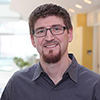
Jason Spence (Ann Arbor, USA)
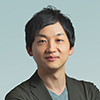
Takanori Takebe (Cincinnati, USA & Tokyo, Japan)
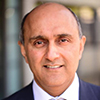
Paresh Vyas (Oxford, UK)
James M. Wells (Cincinnati, USA)
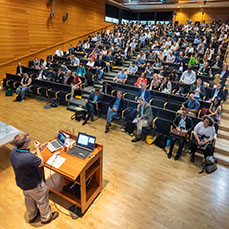
Speakers & Session Chairs
Sina Bartfeld (Berlin)
Daniel Besser (Berlin)
Thomas Braun (Bad Nauheim)
Oliver Brüstle (Bonn)
Nina Cabezas Wallscheid (Freiburg)
Germán Camargo-Ortega (Basel)
Tobias Cantz (Hannover)
Michael Cross (Leipzig)
Sebastian Diecke (Berlin)
Micha Drukker (Leiden, NL)
Marieke Essers (Heidelberg)
Hartmut Geiger (Ulm)
Ingmar Glauche (Dresden)
Mina Gouti (Berlin)
Anne Grapin-Botton (Dresden)
Simon Haas (Berlin)
Ira Herrmann (Bonn)
Zoltán Ivics (Langen)
Ralf Jauch (Hongkong) supported by Centre for Translational Stem Cell Biology (CTSCB), Hong Kong
Bert Klebl (Dortmund)
Hannes Klump (Essen)
Andreas Kurtz (Berlin)
Karl-Ludwig Laugwitz (Munich)
Heiko Lickert (Munich)
Carsten Marr (Munich)
Ulrich Martin (Hannover)
Ana Martin-Villalba (Heidelberg)
Elvira Mass (Bonn)
Mick Milsom (Heidelberg)
Michael Rieger (Frankfurt a.M.)
Hans Schöler (Münster)
Insa Schröder (Darmstadt)
Thomas Schwarz-Romond (Munich)
Harald Stachelscheid (Berlin)
Laura Steenpaß (Braunschweig)
Torsten Tonn (Dresden)
Anja Trillhaase (Hamburg)
Wolfgang Wagner (Aachen)
Claudia Waskow (Jena)
Robert Zweigerdt (Hannover)


Gold Supporters
Silver Supporters
Bronze Supporters


Academic Supporters